
The Civic Imagination: Growing Up Before Media Became a Marketplace

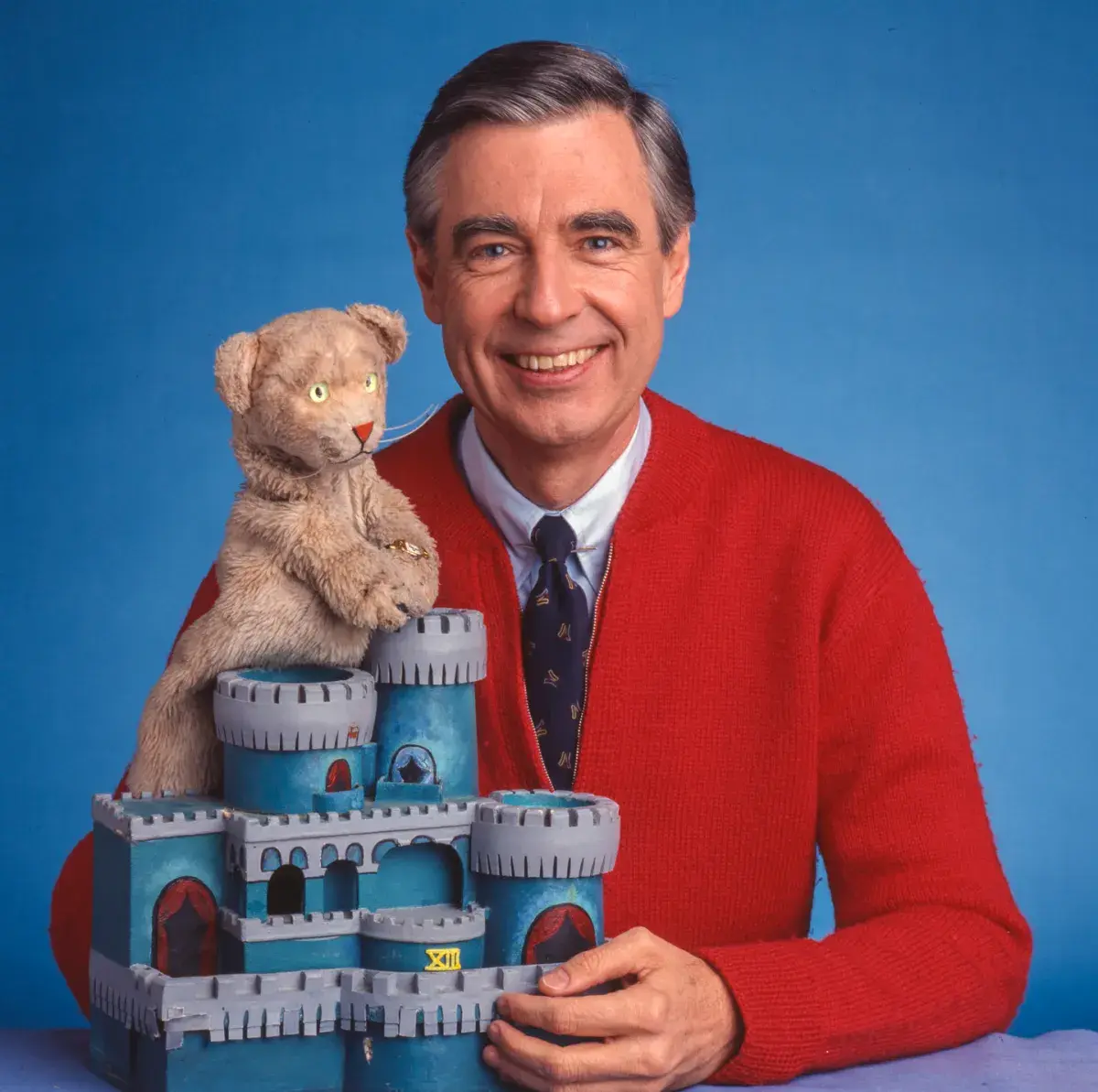
The recent dismantling of PBS brought back some memories. Its contrast feels sharp, distant– especially when compared to the current state of media. PBS is a relic of a different era– founded in 1969 by an elite consortium that blended civics, the arts, and educational programming. The early scaffolding of modern cybernetics started with PBS; Media, public interest, academia, and the government- all intertwined and purposeful.
Since its inception, PBS was an innovator in the emerging relationship of mass media and society- not yet in a superficial or corporate context, but to weave the idea of television with civic engagement; a deeply philosophical belief that transparency, empowerment, and collaboration would foster cohesion and positive social change. PBS was also one of the first to show the internal workings of government- long before CSPAN.
Kids programming was a foundational piece as well. Some of my earliest memories are of PBS shows. Vividly remember Sesame Street, Mister Rogers’, Reading Rainbow, Ghostwriter, Where in the World Is Carmen Sandiego? Bob Ross, The Magic School Bus, SquareOne TV and for some weird reason, the claymation California Raisins.
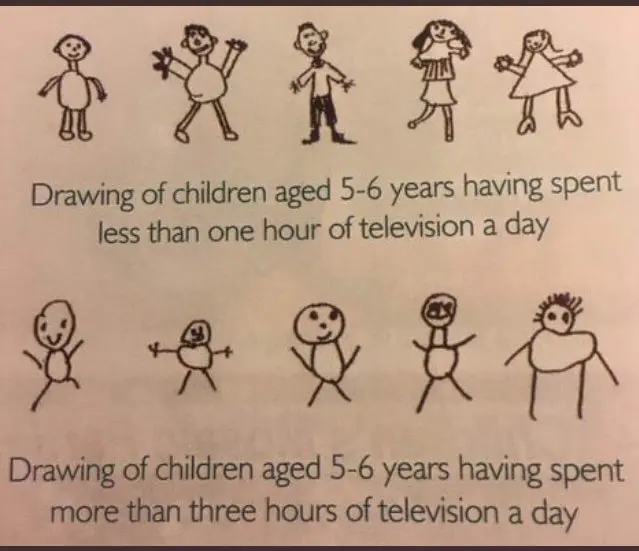
Impossible to recognize at the time but looking back, this was the Golden Age of kids television; not yet consumed by technology, gamification, corporatization, or incessant advertising. Television was also still a separate and ethereal domain from reality. Children were still expected to ‘go outside’ after a while. What was watched on TV was then acted out. There was no such thing as iPad kids or the permanent ingratiation of technology into physical life. The only time you saw their kids hunched over, nose down, was maybe with a Game Boy, but more often than not, a book.
This is the other aspect: PBS kids programming was not TV aimed at entertainment per se- it was aimed at cultivating learning skills and reading. The cutting edge of media syndication intersecting with modern pedagogy. Free, publicly accessible information designed to inspire, teach, and empower.
The most important intent of PBS was building off the established science that children who are able to attend Head Start or Pre-K, fare notably better academically than their peers who don't. They show up to Kindergarten more self-aware, more outspoken, able to express themselves, and engage deeply in the learning process. Kindergarten isn't when they start to learn- it's really when their learning journey should accelerate under structured guidance.
I was raised by a single mother, who struggled to make ends meet. Despite her being usually busy- she made time to read to me most nights- and not some passive endeavor either. It was expected that I read with her, sound out words, learn the emotion and emphasis surrounding phrases and express what those meant to me personally.
I was one of the lucky ones- my early environment was supportive, constructive, and curated. I went to Head Start. The programming I was watching, the questions being asked by teachers, the conversations at home, all mirrored each other, giving way to a constructive feedback loop.
Despite mountains of evidence that this recipe empowers children to have better life outcomes, it is more often than not, overshadowed and dictated by the structural inequities that exist in childhood development. Kids that don't receive early focus or are unable to access Head Start- whether due to affordability, transportation or some other limitation- struggle for the rest of their academic careers, and then of course, struggle to surpass their parents’ levels of schooling and economic position.
PBS was designed to fill that gap- to be in essence, a Head Start for children that wouldn't receive it otherwise. And goes to show, even now, 30+ years later, the media you're exposed to in this early phase of life, where your earliest memories are formed, are very much anchors to your identity and define how you perceive and engage with the world.
Out of the list mentioned above, Reading Rainbow and Mister Rogers stand out the most because it bridged my growing interest in storytelling and reading, with the outside world where your understanding begins to expand facilitated by media figures.
There was also a religious component to my upbringing, with radio being a big part of my early years. Where lots of kids were gorging on Saturday morning cartoons, I was being indoctrinated by Focus on the Family: Patch the Pirate, The Sugar Creek Gang, Adventures in Odyssey, and Ranger Bill. Superficial religious themes aside, these parables wove the notion of duty, responsibility, allegiance, faith, and truth- into real-world contexts. The characters, either individually or collectively, despite stumbles and missteps, eventually found salvation and redemption.
This doesn't educate in the traditional sense, but it does something else, it attempts to instill a form of moral and ethical literacy that by itself is not functional, but is still part of a larger whole towards a complete education.
It took some time to shake that indoctrination piece, (still have a soft spot for the genius that was Adventures in Odyssey) but something else here was formative: Radio forces and fuels you to imagine the story as it is told: What the people look like, what they’re wearing, their mannerisms, the environment, the action scenes. It becomes collaborative engagement in storytelling- you meet them where they are and shape a world together.
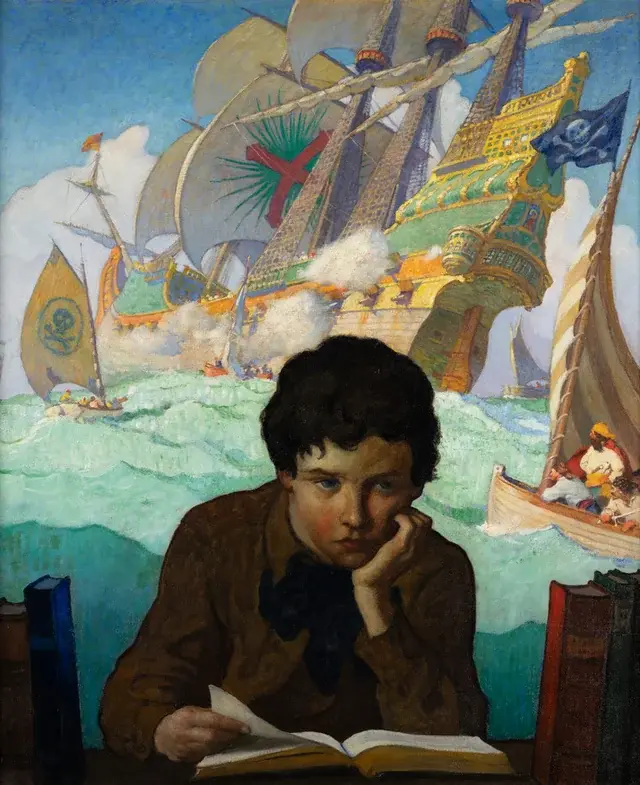
This compounds further with imaginative reading- where the text becomes embodied through different sensory experiences that help shape your inner monologue and thought process. When you add reading, literature, and TV that’s all structured around these concepts, it empowers children to achieve something truly powerful at a young age: the ability to dream, create, and build worlds. Their inner experience becomes fundamentally imaginative- different directions, ideas, scenarios- infinite paths open and collapse into a single direction at your choosing. It forms an early relationship with the surreal, and how your sense of self and imagination coalesce to shape the world around you- and more importantly, being aware of it.
Foundationally as humans, storytelling is essential to our understanding of the world and each other. And it's not just storytelling for storytelling's sake either. The stories we engage in are living, breathing, representations of what we value, what we believe, and what we think we deserve.
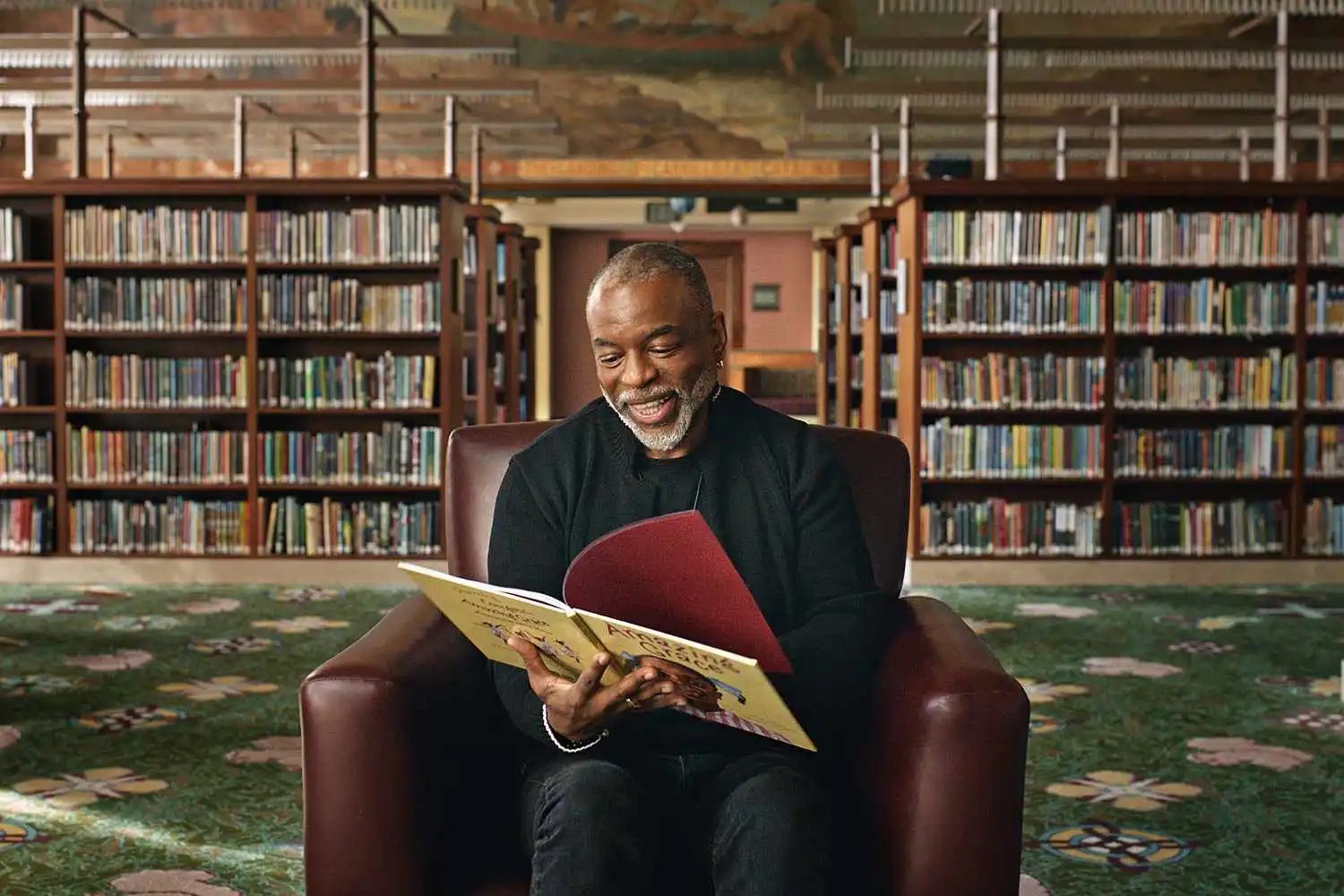
Mister Rogers instilled in every show that no matter who you are, your perspective and unique story is special and that it should be shared proudly. LaVar Burton further built on this premise that the learning process is lifelong and should be approached with joy, excitement, and empathy. Combined, this instills a sense of purpose, a duty of sorts- to thoughtfully engage with the world around you; to shape, learn, share, and build.
It takes immense resources and time to build this foundational perspective in children and to do so in a way that remains accessible. This platform is a progressive staircase that allows them access a different world. It's something that’s not interested in market economics or short-term profitability- it's interested in something much more essential: empowering kids before they even realize it, that anything and any world is possible.
Learning to Read Between Villains
This makes it sound like I grew up in some weird media bubble- which I kind of did in retrospect, but there was still the usual smorgasbord of 90’s cartoons: TEENAGE MUTANT NINJA TURTLES BRO (Leonardo), X-Men, Captain Planet, Thundercats, He-Man, G.I. Joe, Animaniacs, TaleSpin, Darkwing Duck, The Muppets, DuckTales, and of course classic Looney Tunes.
These were still a part of my childhood but just to a lesser extent and contrasted with the other media I was exposed to- the above wasn't a core anchor or frame of reference for the most part.
Something else that stood out from the saccharine Saturday morning cartoons that I noticed early: the loud music, the flashing and pulsing lights, kids with an amazed look of shock, delirium or happiness in the commercials. This was the early phase development of consumerism and childhood entertainment that began to coalesce and accelerate in the 80’s and 90’s. The shows themselves, always exciting and feeding some invisible connection that this excitement and happiness was achievable, but tied to physical objects: Gak, Nerf Guns, candy, Legos and an endless assortment of action figures. But even then, these things still represented a relationship with the physical world- not a permanent escape from it.
The difference here is the distinction between true storytelling and entertainment. Saturdays also lacked depth. A still biased exception of course: Batman: The Animated Series. Don't really recall where the love of Batman was born- but particularly fond of this series. It's still highly rated- so not entirely an isolated view either. Noted for its Dark Deco animation and unique style that mirrored its theme and moods- evoking a classic film noir.
But beyond the animation and superhero motif, there was something else here that was revolutionary at the time. Most shows stayed within the confines of age-appropriate themes. BTAS did something else: its themes were mature- it talked to kids like they were adults. The tone reinforced a seriousness without negativity, and made space for self- reflection in ways similar to Mister Rogers.
Its themes included grief, dual identity, mental health, environmental collapse, and corruption- subjects typically excluded from youth media elsewhere. It asked questions like: was Mr. Freeze really a villain for trying to save his wife? Did Poison Ivy's war on corporate abuse and love of the environment mean she deserved to be punished? It exposed villainy as a spectrum- that there are meaningful differences between Lawful and Chaotic evil.
This manifested as Ra’s al Ghul believing he is saving the Earth from humanity’s destructive tendencies. Or The Grey Ghost lashing out as they struggle with obsolescence and lost purpose. Two-Face and his Janus duality, struggling between morality and compulsion. These arcs were contrasted with the wounded sociopathy of the Penguin or the Joker's clear psychopathy and sadism.
This set the stage of developing a perspective that the world is very much shades of grey, subjective, messy, and sometimes unclear what is right or wrong. This storytelling stands in stark contrast with the moral absolutism framed by Christian media. I found I was drawn to stories that consistently engaged in ambiguity, along with empathy and understanding in the face of tragedy and defeat.. further layered by perspectives that built this messaging and outcomes. These themes always seemed to be uniquely applicable to life and reflect what was happening in the news.
Other programming was too easy, simplistic, hollow, childish or fearful. I read all the transitional books, I saw all the early programming, the classic novels, animation, movies- but most, if not all of it felt.. boring.. like it was obligatory or just archaeology of things old people liked when they were kids; antiquated and no longer applicable to actual life.
BTAS intrinsically felt much more real, aligned and interesting compared to everything else that I encountered; engaging and thought provoking and even though it was unconscious at the time, I was choosing the type of stories and perspective that would define and shape the rest of my life.
Active Literacy and the Formation of Taste
We’re tracking a progressive arc here: The early constructive exposure to media and literature, the contrasts of thematic differences, accompanied with the drive to approach things with a thoughtful, purposeful intensity. Explore. Experience. Understand. A type of active literacy that is a doorway to an even larger world, bridged with the ability to navigate and think critically as you encounter new things.
I became a voracious reader. And when books were boring, I skimmed and looked for words I didn't recognize. I wanted to be challenged, entertained, provoked. Late elementary and through middle school, when others were grappling with grammar, themes (or just general lack of interest) of books like The Giver, Hatchet, or The Odyssey, or wrestling with The Outsiders or Lord of the Flies, I was reading Koontz, Crichton, and Grisham + anything remotely similar.
I wanted to wade and navigate the murky complexity of human experience, unafraid of choosing sides as the invisible forces of good and evil battled it out on grand scales or through the everyday actions of great, and sometimes not so great individuals.
But it was more than that- the edge where technology, ethics, difficulty, the supernatural, intelligence, all intersected.. there seemed to be countless lessons there. Learning how others adapt, survive against the unimaginable power of fate, its multiplicity and our consistently laughable attempts to control it.
This is what felt the most real, the most aligned. An irresistible gravitational pull and my preferences began to exist solely in this genre of progressive, technical, visionary fiction, along with thrillers and historiography. But through adolescence and its associated literary journey, this is just the first goal post. The next is keeping your interests and development, from drifting into cravings for distraction, novelty, or nostalgia.
These are the vices the newly educated must grapple with next and arguably the most challenging. Ensuring your earliest interests don't limit, distract, or bore you. A quest for more, transcending the limits that are thrust upon you, either adopted or discarded.
Fantasy and ScFi were never of much interest- everything was so tedious. Tolkien was engaging but verbose. CS Lewis, pedantic and exhausting with his incessant Christian themes. Both genres felt like just reading intricate made-up names, with made up words, and made up magic; it all seemed like escapism. I wasn't smart enough to enjoy tackling the technical minutiae of hard Sci-Fi, and so decided Fantasy was escapism, and Sci-Fi was just fantasy books for nerds :)
Horror was something else I attempted, but it felt like a dark or sinister path that seemed best to avoid. Poe was covered ad nauseam in class: The Tell Tale Heart, The Raven, The Black Cat and all the allegories to society- but still seemed like work. Its cobwebs more reflective of its age rather than anything scary.
Goosebumps was also immensely popular in elementary and middle school. Where Poe seemed archaic, the uniquely powerful RL Stine did something significant from a cultural standpoint, he blended reading encouragement and engagement. Not in some limited sense either- but from an immense catalog of writing that intended to capture children early, and then transition them to his young adult series Fear Street. Shaping an entire literary perspective, all within a genre under his purview.
The kids that made this progression, eventually evolved to King, Barker, and Rice. I remember them always having some spacey look, from either staying up too late reading, or plagued by nightmares and the grotesque.
Not to say I didn't have this as well- but it never seemed enjoyable. Horror and gore for their own sake seemed unnecessary. What did it say about the individual if they enjoyed reading stuff like that? Horror books through school were displayed almost as badges of honor. It meant you were smart, unafraid of the dark, on multiple levels.
Despite the pressure here- it never took hold. Just fantasy books for the damaged or perverse.
However RL Stine's literary orchestration is a metaphor for what was happening in society at the time. There was starting to be a disproportionate amount of horror movies, TV shows, and authors that became mainstream in the early 90's. Up until that point, horror was just a marginalized genre that started evolving into an aggressively marketed category: syndicated IP, clothing, music, blockbusters, Tales from the Crypt, and zombies going mainstream.
Hot Topic was founded in 89’ creating a refuge for the legions of punk, goth, horror, and Marilyn Manson fans that became an emerging identity. Horror no longer niche, punk no longer threatening- all becoming a form of safe rebellion from sanitized society. Also opening up space for the current darker expressions of identity and normalized deviance that can be traced back to this period.
We’re getting slightly off topic here and not trying to turn this into some general media studies excavation. But this highlights how a tsunami of influences hit children early, especially during the formative years. Immense pressure exists to fit into these predefined categories. The exposure is progressive, connected, and before the individual realizes, can become a crystallized identity.

The Screen Becomes the Town Square
Cinema is a separate theme as well. Plenty of movies had a big impact (the Matrix being a seminal one) and it may be a controversial take, but movies are not great at storytelling. It’s impossible to tell a good story in 2 hours. Maybe you can squeeze it in 3, but who wants to sit for 3 hours straight?
By themselves, movies are more designed as spectacle or artistic expression, to be provocative, or performative, or to have emotional appeal. Movies are just appetizers in most cases, they can't match the progression or intricacy or influence of a dozen+ hours of a series. The storytelling is more layered rather than rushed. Outside of literature, series are the last surviving narrative form where story complexity, character development, and its associated grandeur, have the ability to unfold.
The never-ending search for depth transitioned from books to television series. I had limited exposure to TV growing up and always felt a sense of missing out. Catching up on all the classic series everyone talked about became important. I needed to understand some obscure phrase or reference that was mentioned, or maybe I could find some surprise or insight that was comparable to the earlier discoveries.
HBO’s Rome stands out from everything I’ve seen and is probably the all-time favorite. As is the case with most kids, Rome becomes a source of endless fascination. Especially since Rome was always framed as a great evil in a religious context growing up.. But how can something so grand, powerful, and majestic be intrinsically bad?
The series did a phenomenal job at conveying the human side of Caesar, Octavian, Cicero, Mark Antony and those around them. The series is less about Rome and more about the people of Rome. There’s something to be said about humanizing these lions of history. Contrasting their fallibility and weakness, with glory and defeat. A reminder that anyone who dares to dream differently, can accomplish the unimaginable. Also haunted by Ciarán Hinds as Caesar. Permanently etched in my memory is his attempt to pull his own death veil.. Man that shit sticks with you.
A worthy mention as an inverse reflection of id and ego is Spartacus Blood and Sand- viewed as a response to the shadow cast by Rome. A reminder that even slaves can defeat the greatest armies ever assembled. Equally noteworthy was that Andy Whitfield was battling terminal cancer during the series and it was his last performance, giving it another dimension and weight.
Nip/Tuck was also formative and the first adult series I really liked growing up. The biggest lesson, what it means to be internally vs externally beautiful, and how the pursuit of perfection and success, destroys the very selves (or our families) in the process of perceived liberation and accomplishment. A scathing critique and warning of superficial achievement and all its trappings. (Rip Julian McMahon)
Breaking Bad gets a connected note here: the cost of pursuing the moral good and its rationalizations, unintentionally leads to the destruction of self and those around us. Vince Gilligan is a master of storytelling as well. His ability to build worlds through emotion, wardrobe, lens, color palette, and to support incredible performances is just exceptional cinematography and art design.
The Wire is outlier too. Its brutal portrayal of street life and the human cost of trying to escape the systems that hold you in place.. including the toll it takes on those maintaining these systems of control. Despite the darkness, there are always glimmers of hope for envisioning different worlds.
The Sopranos. A gritty tribute to a glorious past. Its reflections on family, community and loyalty in a fraying world in something to never be repeated. Framed in a deeply human, dark, and expressive artform.
House of Cards, with Spacey's downfall aside, the modern realities of political life, power, and ambition are unflinchingly portrayed here. Maintaining facades. The amorality and risk-taking required to accomplish great things. All woven together in a nihilistic interpretation that relationships, society, life- are all just transactional. Realizing this becomes a source of power.. but at what expense?
Game of Thrones, similar as well, but much more primal- speaking instead to something ancient. Endless power jockeying, scheming, and gamesmanship by Elites. Rationalized to the lower classes as Memento Mori motifs and that ‘good must triumph over evil.’ But the outcomes are always much more ambiguous. No clear winners, plenty of losers, and immense suffering wherever you look. Also a lesson from a showrunner standpoint of alienating your audience when you sidestep a woman's arc, to elevate a man’s.
Lastly, on a lighter note, It's Always Sunny. Forever grateful that the gang normalized that dark humor is not only acceptable, it's preferable in our current social condition. If you can’t laugh at the dysfunction surrounding you, you’re already crushed by it. Also unsure if they realize it but it's also a profound meditation on the philosophy of Bataille in modern contexts.
So with all this being said, and despite the lessons, the beauty and appreciation, there is still a price here. This is hundreds of hours of sitting in front of a screen; with probably hundreds more of wading through the garbage and mid-tier stuff to find gems and things that resonate. Time wasted? Probably not. Well utilized? Less clear.
Connecting your personal experiences to the past and others, is still one of the most important intellectual and human endeavors. But the fact that in modern society, our connections to the past, to greatness, to communities and others’ experiences- can now only be reached through television. The town square no longer exists, and only briefly within these confines.
Derrida also cautioned about the siren song of TV and the mesmerization that can occur for the perceptive and engaged. The lighting, editing, writing, acting, the score, the styling, wardrobe. The subconscious motivations, its invisible aesthetics, beauty, philosophy; just parts of a whole that creates an arrow, pointing in an undefined direction to be continued by someone else.
These experiences however must translate into something: a destination, a learning, an applied theory towards a new legacy. Avoiding just forever adding to a collection of stories that sit on a bookshelf gathering dust. Endless consumption and chasing something undefined, only experiencing life through the eyes of other people.
Who Controls the Story Controls the Future
Storytelling is woven deeply into our meaning-making as humans. Existing across history, time, and cultures, laying the foundation of identity, memory, and cosmology. It bridges deep truths and expression, connecting older generations into a common narrative link.
These myths, epics, and folktales are almost rituals: mirrors and maps that reflect our current situation but also give us direction while charting paths through conflict and change. These rituals are nothing short of magic- unlocking encoded wisdom, values, and warnings. Breath and sound- giving form to the inchoate flow of existence- ensuring collective knowledge, our sense of meaning, and our identity endures.
The platform has evolved through time: Cave walls illuminated by torch light, the bards, the stage, street sideshows to the operatic tradition, reel movies to giant screens, or now our personal glowing rectangles- always enamoured by this combination of spectacle and sorcery.
Somewhere along the way, we began to cede these rituals to corporations. Maybe not intentionally, but it's occurred through the slow erosion of responsbility. Part us willingly giving this up, part them understanding how fundamentally powerful controlling the nature of storytelling is.
This structural change began to give birth to sterile and convenient narratives, then commodified. Ensuring its value was always directly proportional to its appeal and profitability. The stories that were told began to be fundamentally inhuman- disconnecting us from ourselves, our ancestors, our communities- and instead traded for attention, monetary gain and enclosures of comfort, rather than true liberation.
Reciprocal, grassroots storytelling and its parasocial forms- indigenous oral traditions, women’s folk tales, collective epics- preserved imaginative alternatives to hegemonic myths. More close-knit and intimate, the notion of shared storytelling invites nonlinear and unique perspectives. These epics, poems, and short stories, privilege relationality over conquest, ambiguity over resolution, community over the singular hero. Thus, the parasocial architecture in which storytelling circulates, directly influences whether narrative serves as a tool of domination and repetition, or as an opening into plurality, imagination, and transformation.
This is what makes Mister Rogers method so enduring and ever so important. By making his parasocial relationship reciprocal. By looking into the camera and insisting “I like you just the way you are”—he transformed what could have been passive consumption into a deeply personal affirmation. Rogers treated every child as if they mattered infinitely, undermining transactional notions of value tied to productivity or conformity.
Mister Rogers was revolutionary precisely because he redefined parasocial bonds as a vehicle for social activism, cloaked in gentleness. At a time when television was accelerating spectacle, violence, and consumerism, he used the medium to model empathy, vulnerability, and unconditional regard. His stories became a quiet resistance- leveraging television not to reinforce hegemonic myths or what was commercially popular, but to cultivate a democratic ethic of care, kindness, and social repair.
His activism was radical but subtle: he spoke openly to children about death, divorce, racial integration, and disability, refusing to shield them from the complexities of life while still affirming their intrinsic worth. Most notably, when he invited Officer Clemmons, a Black man, to cool his feet in the same wading pool as him, it was an unmistakable act of defiance against segregationist culture.
All is not lost though, there are still those carrying the torch forward here. Ms. Rachel, at great personal and professional expense, continues to shine a light on the importance of children- no matter their background, culture or belief, and the sacred life instilled in each and every one.
While she’s received accolades from activists, journalists and the global community, we shouldn't dismiss what impact this has on the next generation. Even if they don’t fully understand- it says something powerful about standing up to normalized or structural barbarity, oppression or genocide. Saying “No, this is not acceptable.” Teaching children, through actions, that having the courage to stand up for others, no matter the sacrifice- is always important.
Storytellers are immensely powerful. They shape the future- not just with words or actions, but by sculpting the perspectives of young minds. By engineering parasocial bonds to feel reciprocal, they begin to have a dialogue with children before they can even speak sometimes. Or at the minimum, begins a conversation about things that they would never experience otherwise.
Figures like Mister Rogers or LaVar Burton always addressed the camera as if speaking directly to the child, inviting reflection, empathy, and participation. The structure was pedagogical and nurturing, designed to cultivate joy, trust, and personal growth rather than siphon attention for profit.
When viewed from this lens, the dismantling of public broadcasting is not really austerity or even the typical reduction of social programs. It’s the remaining remnants of where media relationships are used to empower or educate the audience. Regional newspapers collapse, community radio dwindles, and public broadcasting loses funding, literacy declines, the space once reserved for diverse narratives shrinks. Into that vacuum flow homogeneity crafted for scale, profitability, and brand safety.
The messages shared now reflect corporate priorities rather than local or plural ones. Broadcast centralization also normalizes society to see the world as a stage dominated by a few central actors, reinforcing hierarchy and commercial supremacy.
The truth of the matter is that this consolidation is a barrage in a battle for what the future looks like, that exists now in the minds of young people.
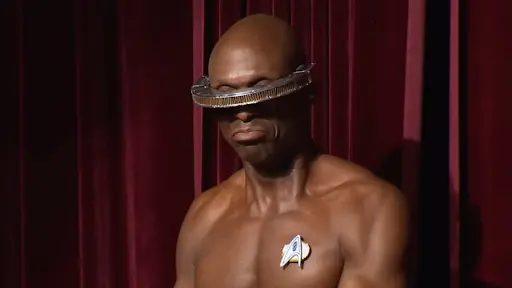
Stories that extract from you
This sets up a clear dichotomy and dialectic between two primary categories of media and storytelling.
The difference between these frameworks is one cultivates transactional bonds vs. one who genuinely wishes to foster growth. This manifests as corporate media leveraging parasociality as a one-way funnel: intimacy is simulated but then redirected rather than reciprocated.
This psychic energy is channeled towards brand loyalty, consumer behavior or the cult of personality. A form of disembodied entertainment that separates the individual from the subject. Turning the relationship into nothing more than a transaction.
It goes deeper though, parasocial dynamics don’t just shape who tells the story, but what kinds of stories get privileged. In highly centralized and commercial environments, repetition of the monomyth (the hero’s journey for example) becomes the dominant template because it reliably reinforces familiar, palatable, and profitable consumer based narratives.
These metanarratives as a whole, reinforce the structural and psychological aspects of biopolitics, the invisible frameworks that govern all of human behavior. This strategy manifests as billion dollar franchises: Harry Potter, Marvel, Disney, Universal, Paramount all maintaining a continuous loop of nostalgia, with just enough relevance to continue its predatory economics.
These seem innocuous at face value- but considering this strategy is purposeful for both boys and girls now: Hello Kitty, Dora, Bratz, Barbie, American Girl Dolls, Disney Princesses. All of these are prominently factored into modern childhood, but their attachment is superficial and brand-first femininity: skincare, cosmetics, jewelry, fashion, room décor, self-care merch, lifestyle products, dolls, perfumes.
These function as identity kits for babies, toddlers, adolescents, and then into adulthood. What exists as childhood nostalgia can be nothing more than the collapse of storytelling into a mechanism that forms identities around predefined psychological structures. Structures that do not encourage unique ideas or identity, nor do they encourage growth and reflection.
Heroes that stand up against this no longer exist. Every character children are now exposed to is connected to a corporation and a brand: Sesame Street now hustles DoorDash. Batman sells Allstate insurance. Morpheus slings Arby’s. Yoda sells Verizon. Marvel slop and SpongeBob on everything a child would ever come in contact with. All of this culminating with DC characters on military recruitment ads.
Maybe it's benign.. it doesn't really hurt anybody right? But the inverse criteria applies. Despite the above franchises generating hundreds of billions dollars or even trillions of dollars since inception, where has this money gone? There are no political movements, there are no major social changes. There are no profound academic contributions. There are no public works or grand achievements. Their impacts are largely defined in terms of IP balance sheets and P&L statements.
Furthermore, this palatability is a core problem. Things that become comfortable and familiar, become rarely scrutinized, allowing the dynamic to persist. The stories are creatively told in a myriad of ways, but the underlying themes and purpose are still the same. Its repetition is forceful. The audience’s emotions are funneled toward singular protagonists, mirroring the concentration of attention around celebrity figures and its crafted alienation.
Complexity also gets flattened, favoring easily exportable archetypes and cycles of conflict/resolution that align with advertising logic. Everything becomes a feedback loop: centralized media elevates only approved parasocial figures and formulas; their dominance draws attention and resources away from alternative storytellers; the civic imagination narrows further, evolving into something synthetic and disconnected from its very audience.
Distinctly, these stories:
- Chase attention, not growth.
- Stimulate without educating.
- Mimic intimacy but do not reciprocate it.
- Flatten imagination into tropes
- Mimicry as connection and identity.
- Turn viewers (especially children) into consumers more than citizens.
Summary / Stories that raise you
There is an important caveat here, we now exist in a Golden Age of podcasts, YouTubers, and individual media contributors and figures; creating bottom up parasocial dynamics that are much more genuine, authentic, and real.
But while this progression marks something monumental from a societal development standpoint, it exists primarily within the confines of tech platforms, algorithmic feeds and modern influencer ecosystems; filled with commercials, product ads and placements. They’re optimized for attention and clicks, cultivating authenticity long enough to eventually monetize.
There’s something else about this vehicle as well. Short-form videos now dominate. 5 min reads. Speedreading, quote-bait and summaries replacing long-form. Rapid news cycles. Zero contemplation and then onto the next thing. This ADHD of thought, makes the act of remembrance intentionally irrelevant.
Knowledge is most effective when it compounds progressively over time. Community storytellers foster a multi-year, multi-century, and multicultural act of remembrance. The ability to remember, becomes a form of becoming, a compounding wisdom that both builds and pays respect to the past.
The civic imagination is built through this act of multiplicity: a chorus of voices, timelines, influences, and contradictions. I experienced this with PBS, radio dramas, Batman’s moral ambiguity, Crichton’s techno-paranoia, Rome’s tragic grandeur- these weren’t curated lessons, but overlapping frequencies that taught me how to see the world.
This is why the dismantling of PBS is not a bureaucratic footnote, it's a symbolic collapse of the importance of literacy, the civic imagination, and this act of remembering. We have ceded the task of raising future generations, shaping values, cultivating empathy, and sustaining democratic possibility to corporations whose only ethic is extraction. Storytelling was once how communities maintained cohesion. Now it is how corporations create revenue.
My childhood existed in a transitional space before these dynamics fully formed. It existed before narratives were fundamentally polluted. We are all shaped by media- but we’ve lost what storytelling really should be doing:
- Deepening moral intuition.
- Broadening emotional vocabulary.
- Nurturing curiosity, autonomy, and imagination.
- Building relationships with individuals, not over them.
- Supporting the developmental flourishing of society.
This is more than just a reflection or understanding- it should be viewed as a tribute. Paying respect to the people that gave a shit. That risked things. That took the time and had the patience to cultivate growth, not by explaining things- but by contributing, inspiring and working towards the formation of unique ideas.
The stories that raised me taught me to imagine myself as a citizen and my life is proof of what these diverse, decentralized and non-corporate media ecologies produce (for better or worse :) But we shouldn't shy away from the fact that these ecosystems are dying; the result of powerful forces engaged in constant ideological warfare.
We should decide if the commons, the town square, and our relationships with one another are worth prioritizing. To reclaim what was lost- rather than relegating these human threads to a bygone era. It’s no longer just about who gets to tell stories either, but about which ways of knowing, remembering, and imagining are allowed to persist.
So this is just a whisper from the past in the midst of the storm. A reminder that your story is important, it deserves to be shared, and above all: “I like you just the way you are.”